End-to-End Product Design
E-commerce
2025.01 - 2025.03 (2 month)
4 Designers
Product Designer
Figma, PS, AI, AE
Progress By Monday
Context
Designing an end‑to‑end upcycling platform connecting creators and consumers
Upcycling in the U.S. lacks clear participation paths and is often undervalued on mainstream platforms. Creators struggle to gain visibility, and consumers rarely see emotional or practical value.
To address this, We designed an end-to-end upcycling platform that connects creators and consumers—from sourcing materials to showcasing stories and fostering emotionally meaningful connection.
Impact
Fostered trust and retention intent in 80% of test users
ReVive improved creator workflow efficiency by 40% through an integrated creation-to-sale flow, while enabling consumers to connect more quickly with style-aligned creators.
80% of users reported trust and intent to return—demonstrating strong potential for sustained platform adoption.
40%
Creator Workflow Efficiency
50%
Preference Matching Efficiency
80%
Willingness for Continuous Participation
Analysis
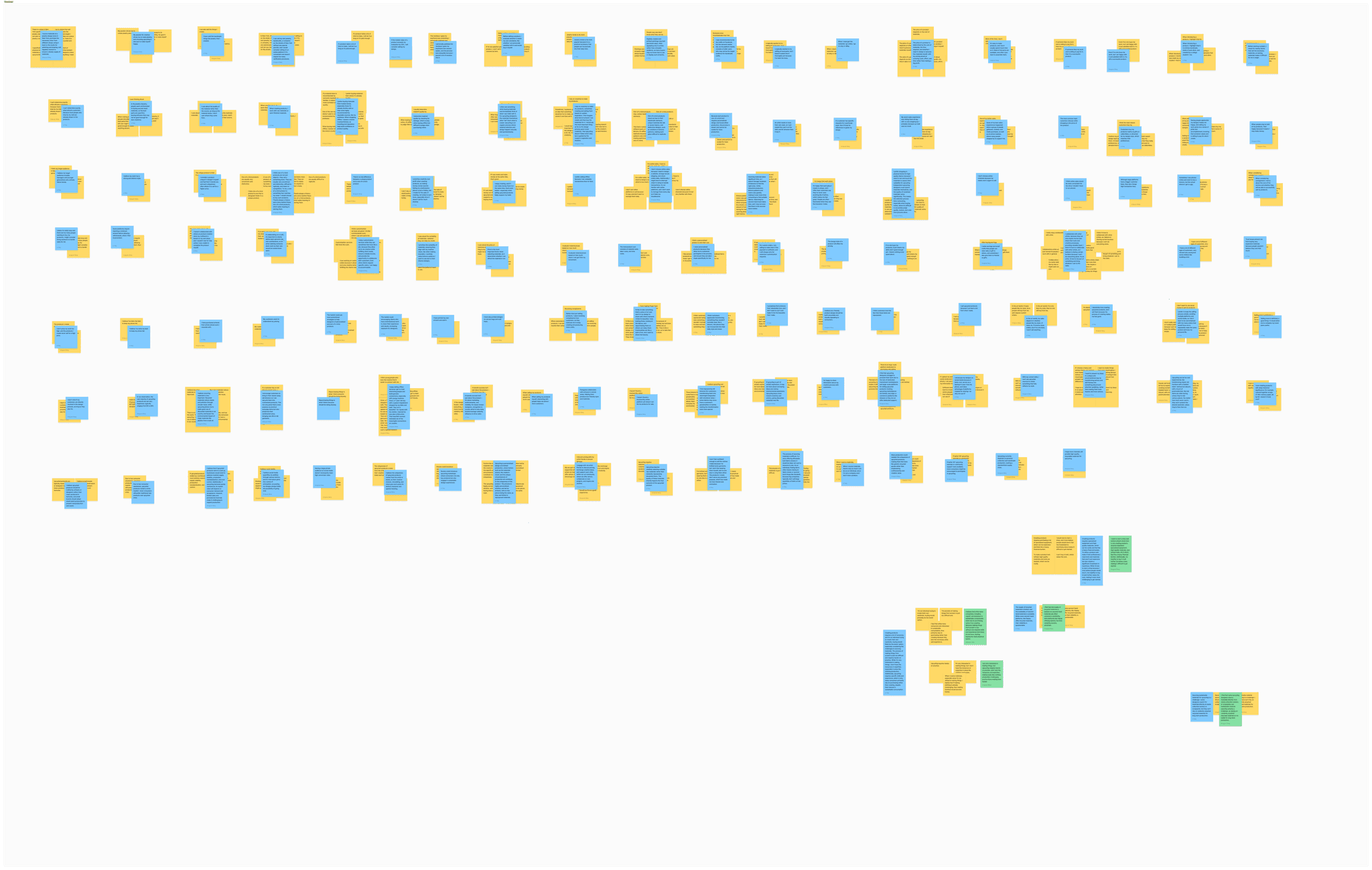
Affinitization
10
interviewee
600+
data points
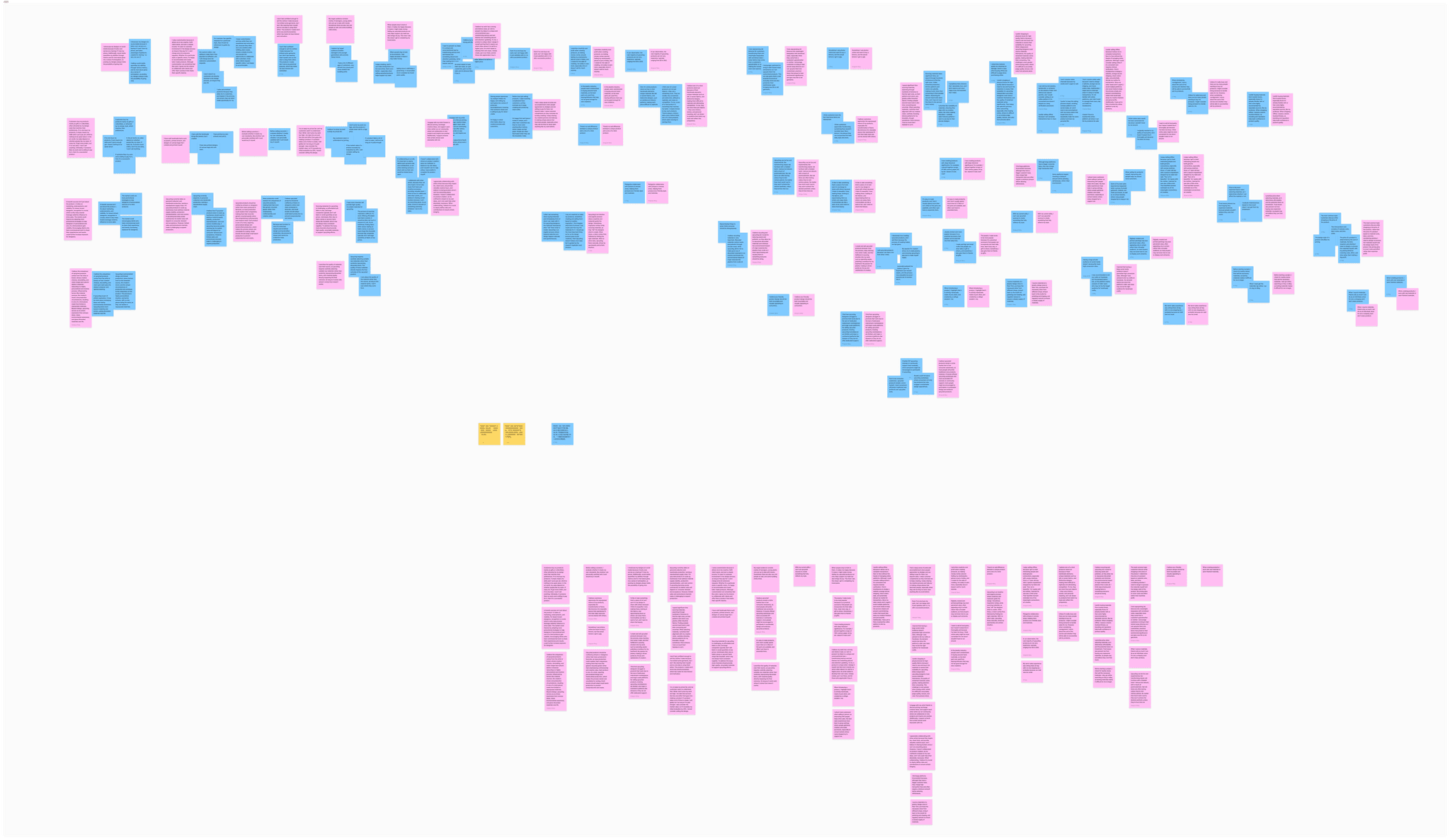
Insights
Creators want support, consumers want connection
60.5% of creators struggled with scattered, unreliable material sources.
50% found online selling too complex and poorly supported.
61.6% of consumers were interested in upcycling but didn’t know where to look.
53.7% valued style fit but had trouble finding emotionally resonant products.
Both groups wanted emotional, interactive connections—not just transactions.
These insights revealed an opportunity: build an emotionally connected upcycling experience by streamlining creator workflows and helping consumers discover meaningful, style-aligned products.
Strategy
Competitor analysis
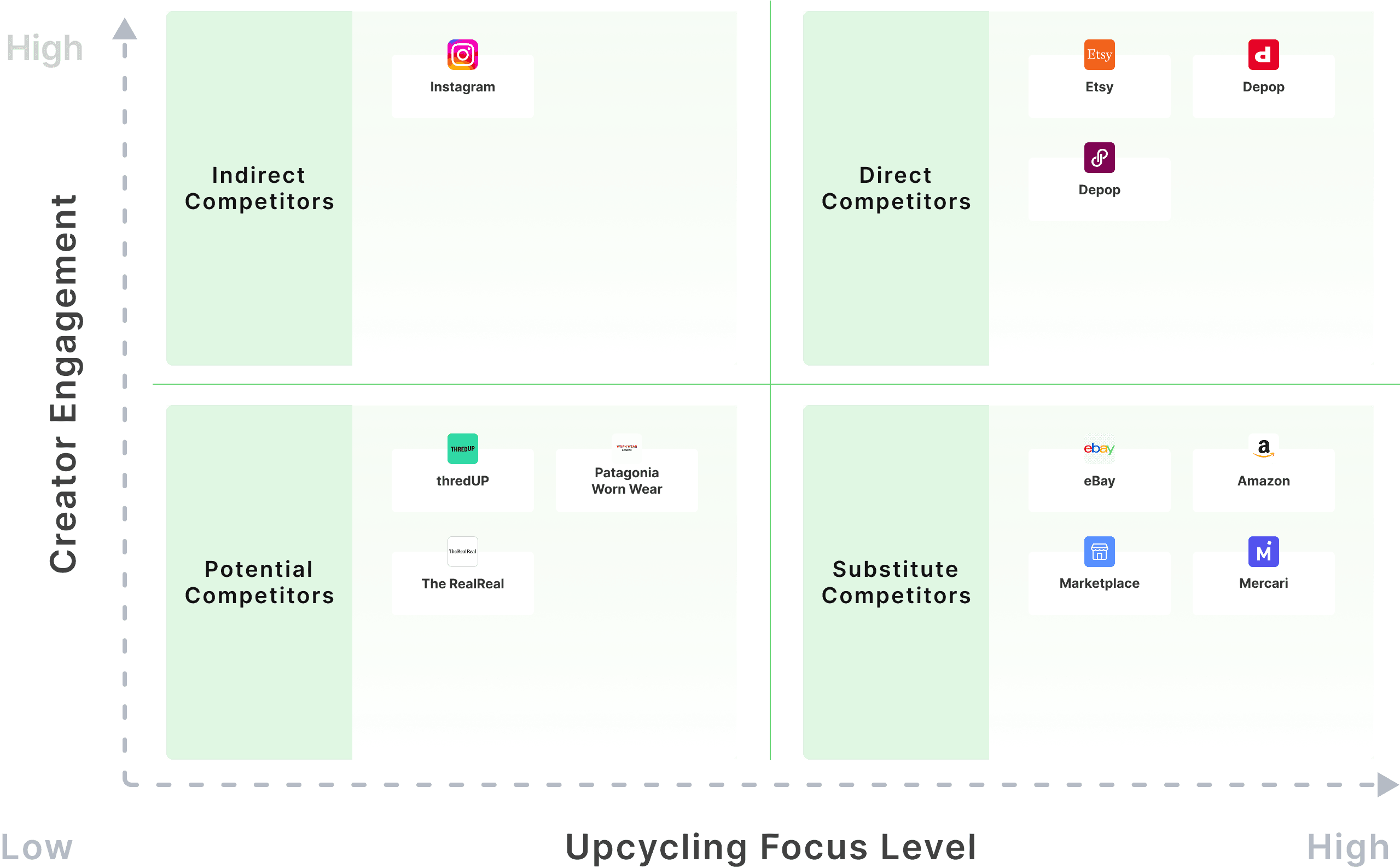
Most platforms drive engagement through style-based following and creator-friendly tools
To identify market differentiation and value gaps, I built a 2×2 matrix ("creator engagement × upcycling focus") to analyze our competitor platforms.
I found that most platforms are enhancing user interaction through content-driven and social design, fostering belonging through style-based following systems, and lowering operational barriers to support small creators' participation and production.
Blue ocean strategy
We want to shift from selling to creating and connecting
Faced with mainstream platforms focused on efficiency and conversion, I aim to move beyond sales-driven logic—centering our ecosystem on creation, connection, and collaboration in response to the needs of upcycling participants, who seek not just transactions, but meaningful resonance with one another.
We seek to elevate creator expression, reduce operational burdens, and foster emotional connections between creators and consumers—so that works are truly understood and loved, not just sold.

Solution
An end-to-end upcycling e-commerce platform that connects creators and consumers
I translated insights from competitive analysis and Blue Ocean Strategy into six design strategies, addressing the needs of creators, consumers, and the platform itself.
These strategies led to the creation of ReVive — an upcycling-focused commerce platform that integrates the full journey from sourcing to co-creation, aiming to build trust, connection, and shared value.

Value Proposition
We help reduce material shortages and trust issues while enabling easy discovery, collaboration, and sales
For upcycling designers and consumers in the U.S. who seek unique upcycled products or want to create and sell upcycled products effortlessly, Our platform is a community-driven solution that connects designers and consumers, making upcycled products accessible, engaging, and sustainable.
Unlike general second-hand marketplaces, Our solution drives sustainability, creativity, and commerce by fostering meaningful connections between designers and consumers in a socially engaging platform.
Value Pillars
Connected Community; Sustainable Creation; Seamless Empowerment
Our value pillars focus on “Connected Community,” emphasizing meaningful engagement over transactional interactions. Our solution supports creators in building sustainable creative practices and commercialization, while delivering a frictionless experience for both designers and consumers.
Business Positioning
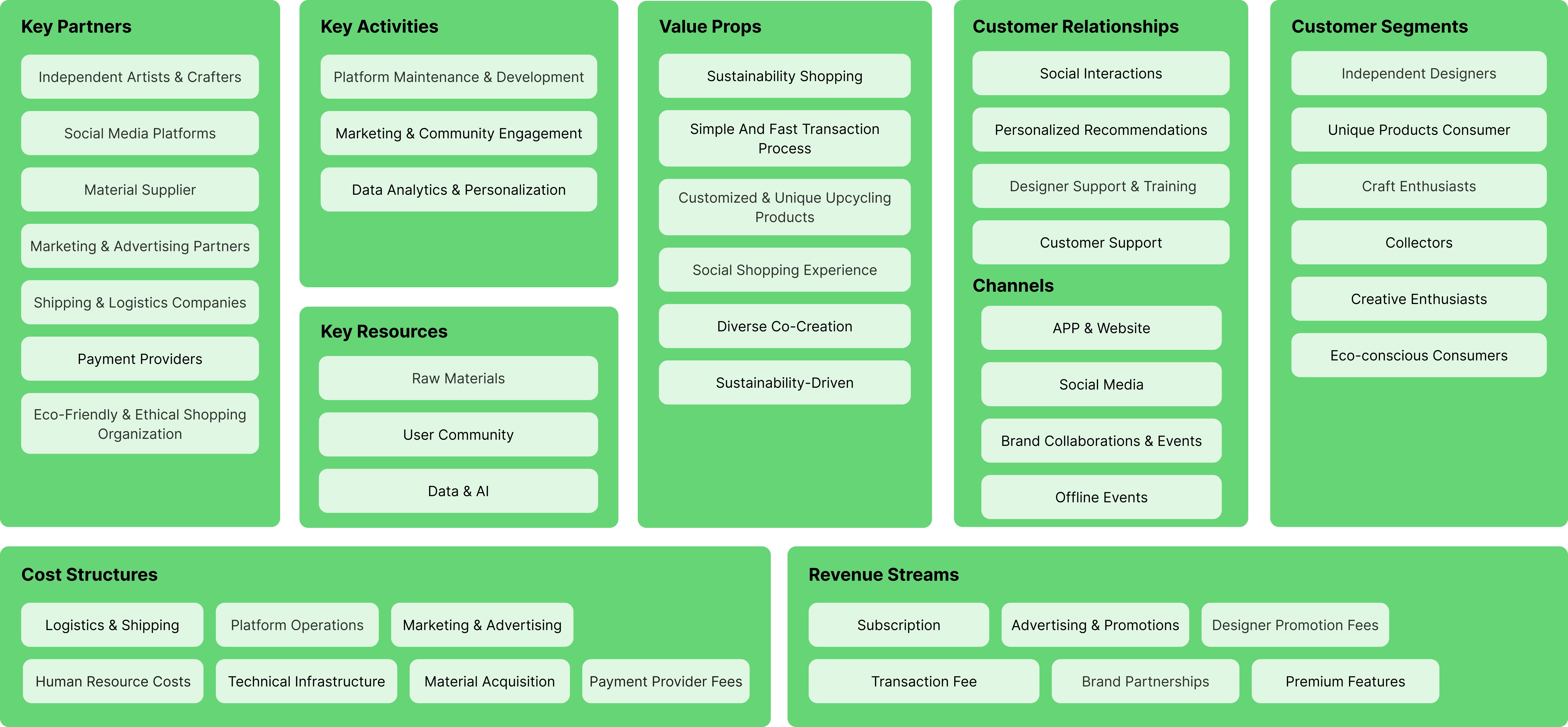
Business Model Canvas
Centered on a community-driven platform, dedicated to sustainable creation and commercial practices
Our commercialization model centers on a community-driven platform for sustainable creation and commerce, connecting independent designers with consumers who value unique, eco-conscious products. The platform generates revenue through subscriptions, transaction fees, designer promotion fees, premium features, and brand partnerships, while advertising provides additional monetization opportunities.
ZAG17
We aim to transform upcycling from a marketplace into a movement
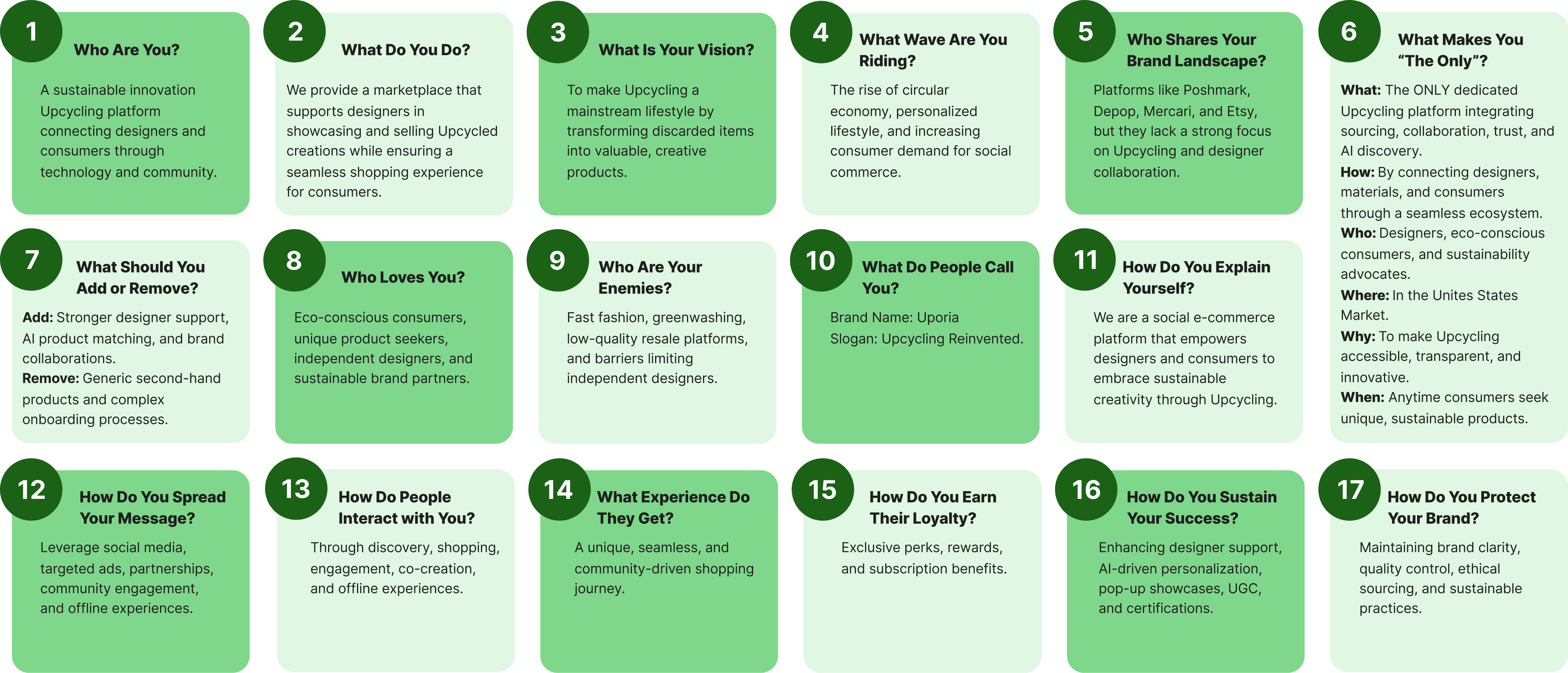
After creating the business model canvas, we summarized our business concept in Zag17. This will help us better sort out and understand our business model, brand landscape, strengths and weaknesses, etc.
Feature 01
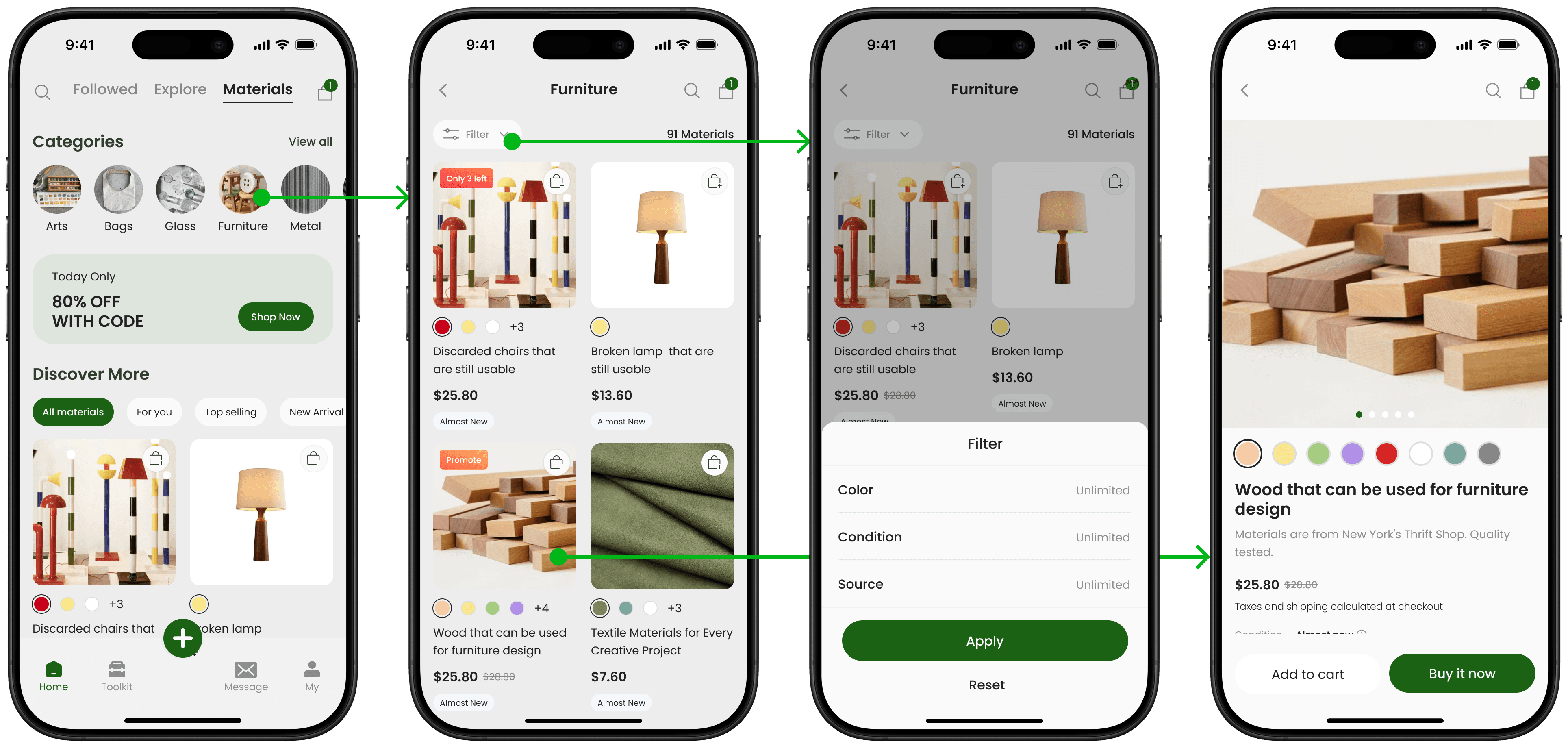
A one-stop material sourcing portal to improve creators’ sourcing efficiency
Upcycling creators often struggle with fragmented, unreliable material sources—slowing output and limiting creative stability.
I designed a one-stop sourcing portal that not only streamlines access, but also inspires exploration and idea ignition through habit-aligned discovery.
The interface follows Jakob’s Law, using familiar e-commerce elements like layouts, tags, and pricing to reduce cognitive load. Filtering logic reflects real creator behavior—such as filtering by color. The “Discover More” section uses dynamic tags to encourage exploration and evoke a market-like experience.
Feature 02
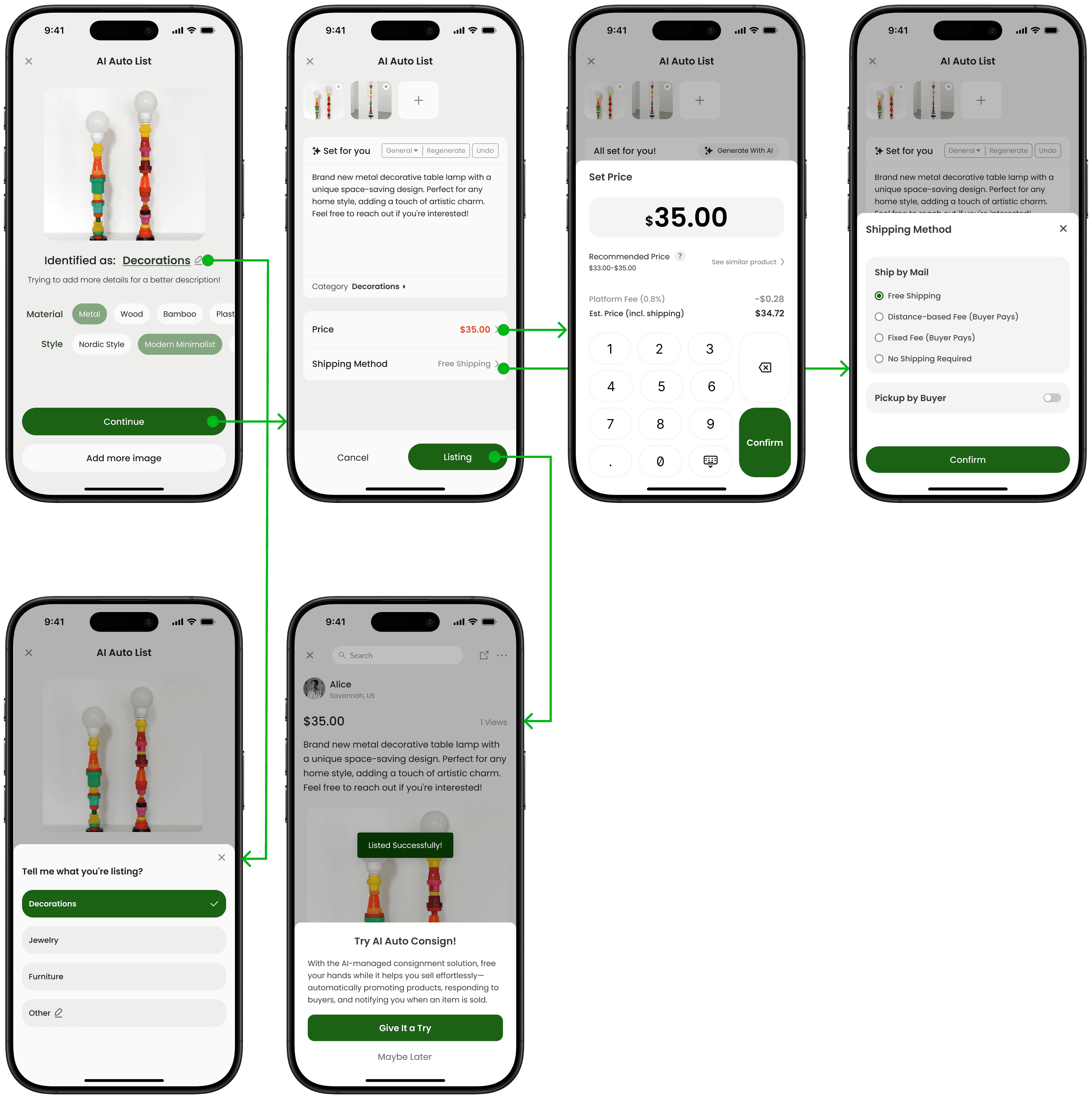
AI-powered auto-listing to reduce the operational burden for creators
Creators often face complex, unstructured listing flows—causing friction, reducing motivation, and driving them away from online selling despite their potential.
I designed an AI-powered auto-listing flow to reduce operational burden for creators—from category recognition to content and pricing generation—making listing faster, easier, and smarter.
The system uses Auto-List to recognize category and material, generate AI descriptions and pricing, simplify the listing process and lower entry barriers. Features like AI description style selection, undo support, and transparent revenue breakdown help reduce friction while increasing control and visibility.
Feature 03
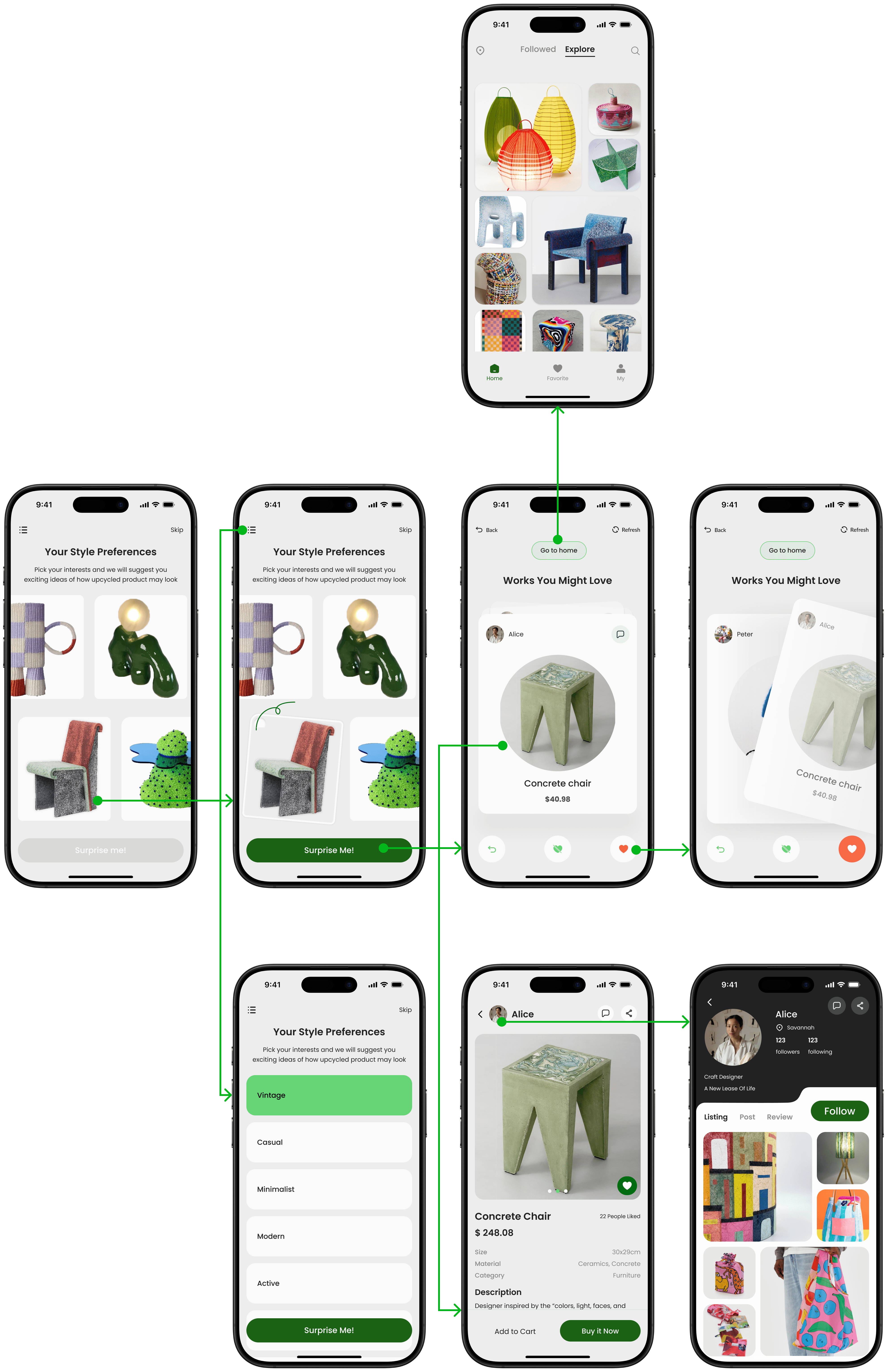
An interest-led discovery flow to help users find style-aligned creators and products
Consumers seek resonant style and creator connection, but most platforms still optimize for categories and conversions—making it hard to find creators who resonate, styles they love, or a sense of belonging.
To address upcycling consumers’ unique needs, I move beyond the typical “category-and-filter” approach—designing an emotional, interest-led exploration flow for effortless discovery of style-aligned products and creators.
Image-based tags and list toggle enable quick style expression. Swipeable cards support like/dislike with undo, while clear labels and explicit exits reduce cognitive load and misoperations. Users can follow creators and explore more works and stories to build lasting connections.