Sponsored Collaboration Project
Healthcare
2025.03 - 2025.05 (2 month)
21 Designers
UX Designer, UX Researcher
Figma, Zoom
Due to NDA restrictions, this case study highlights our process rather than confidential project details.
Overview
Building the Invisible Infrastructure Behind Faster, Smarter Care Delivery
Over the course of 10 weeks, I collaborated with a multidisciplinary team to reimagine staff coordination in smart hospitals in partnership with AdventHealth. Our goal was to improve task response efficiency and care visibility while working within the constraints of real hospital infrastructure and stakeholder needs.
I developed the research strategy and synthesized actionable insights to inform the design direction and led the design of core features that anchored the final solution and actively influenced cross-functional alignment by connecting user needs with system-level opportunities.
Research
Identify needs and reveal common goals
At the beginning of the project, we were not fully aware of the hospital’s existing internal navigation system, nor did we have a clear understanding of patients’ real pain points.
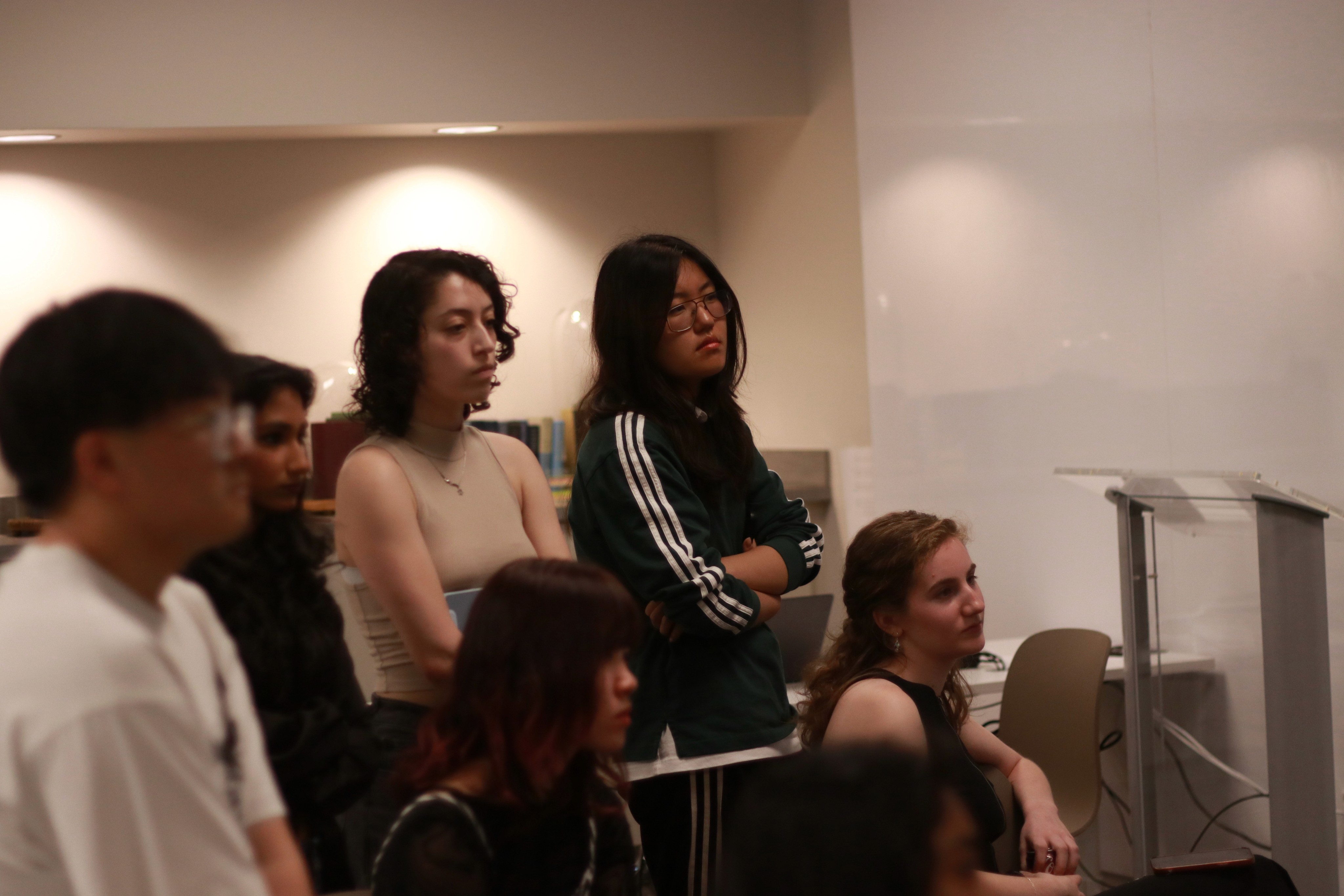
To address this, we conducted in-depth research including desk research, surveys, interviews, and in-person shadowing observations in the hospital to better understand the problem space and user needs.
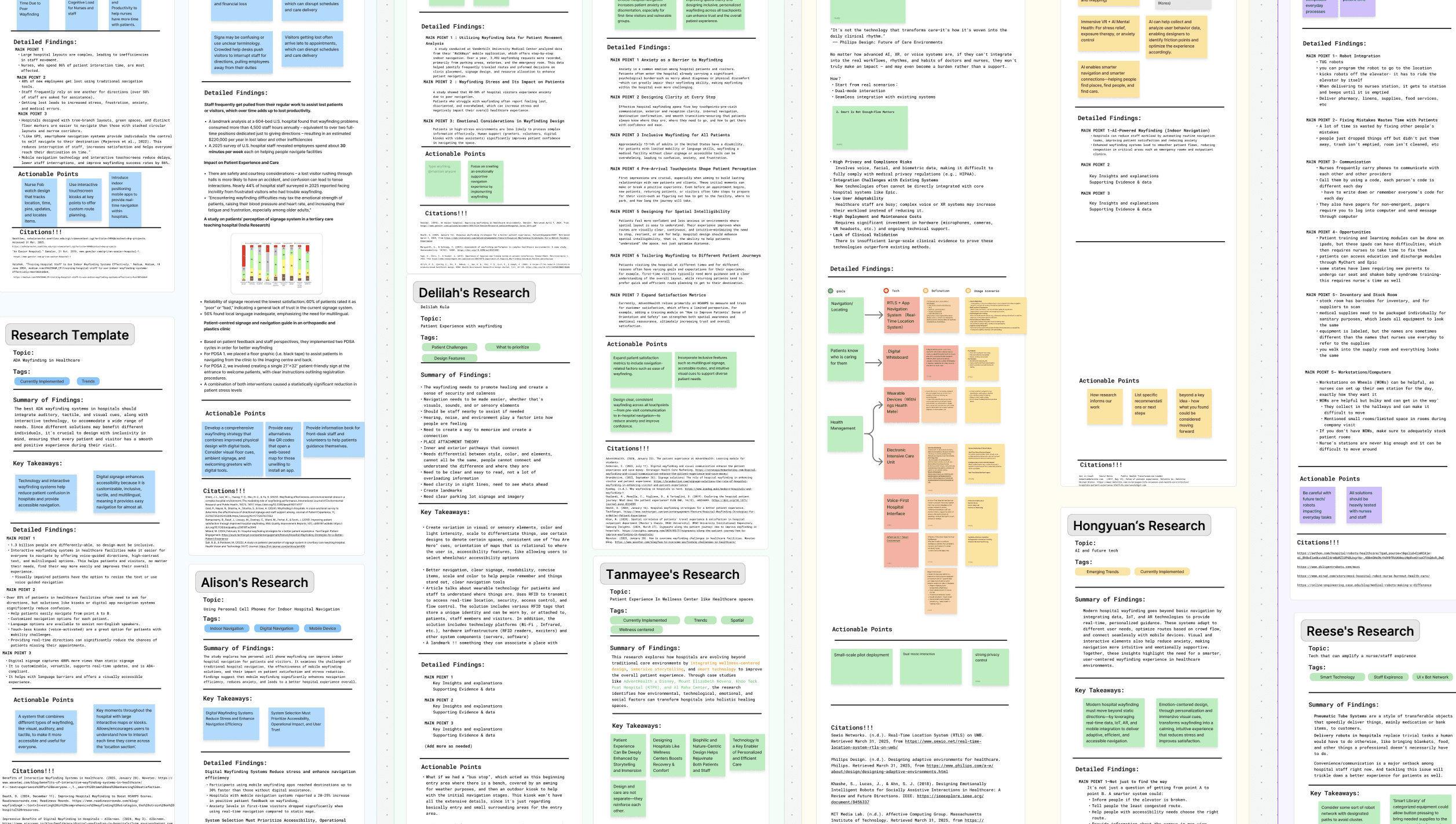
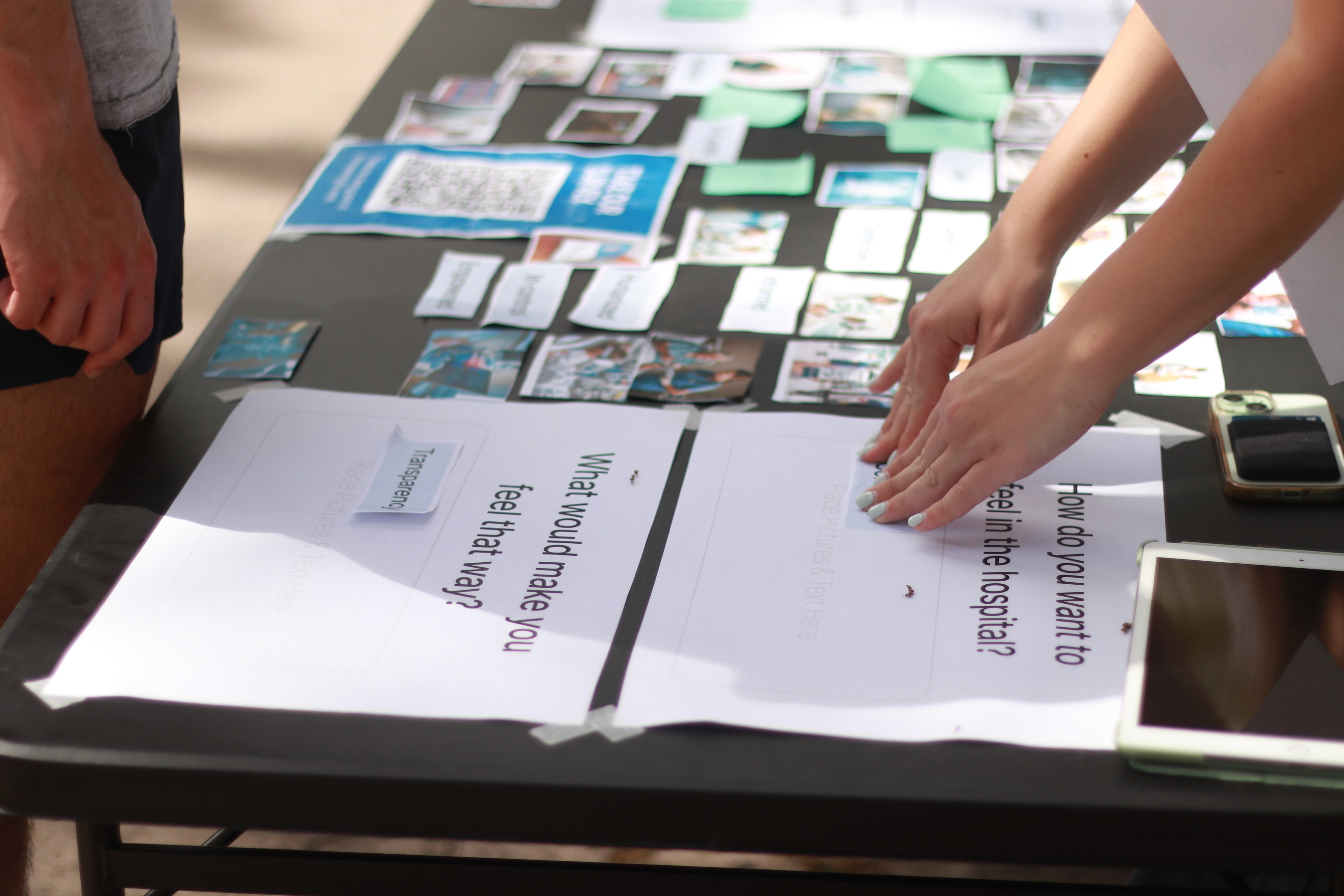
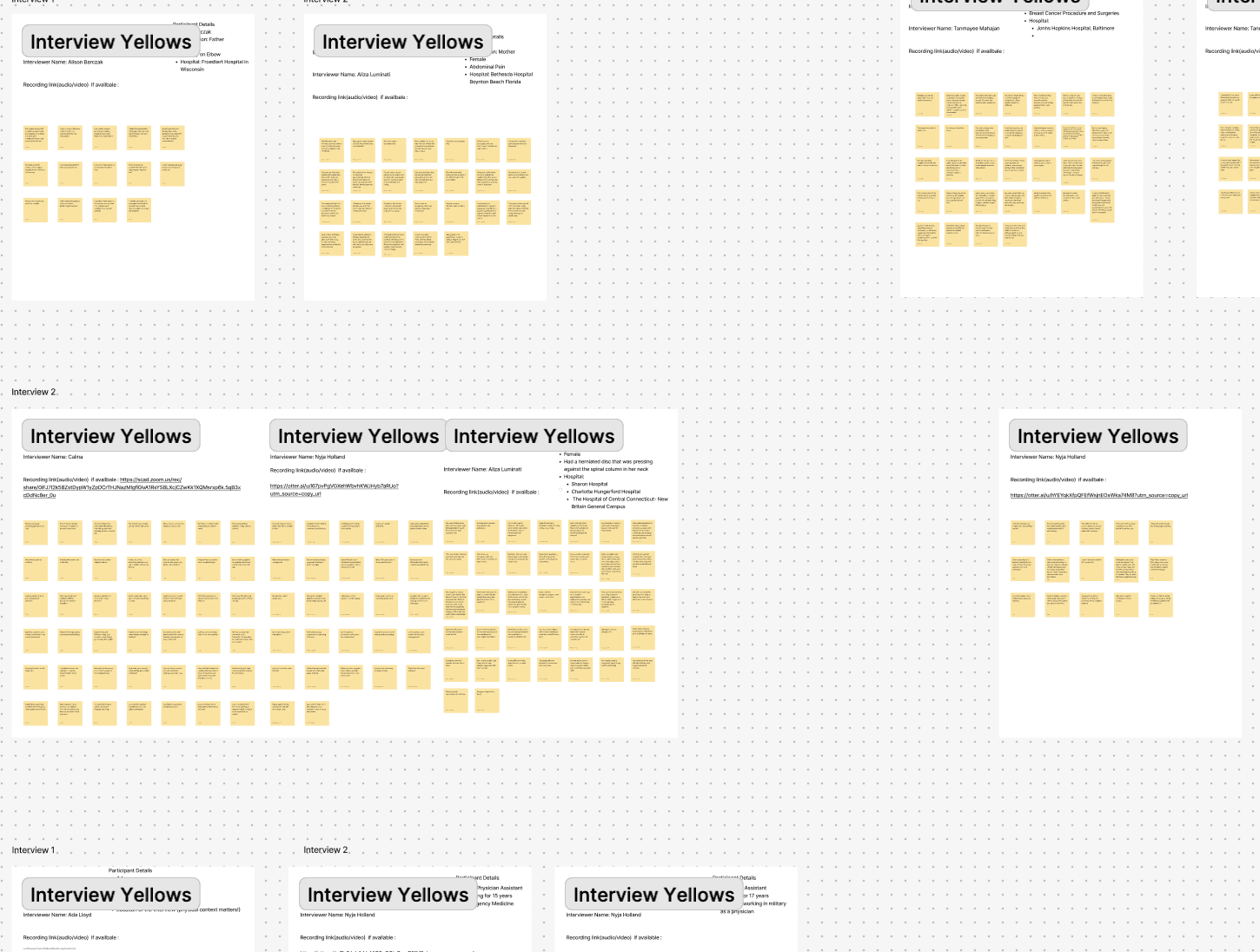
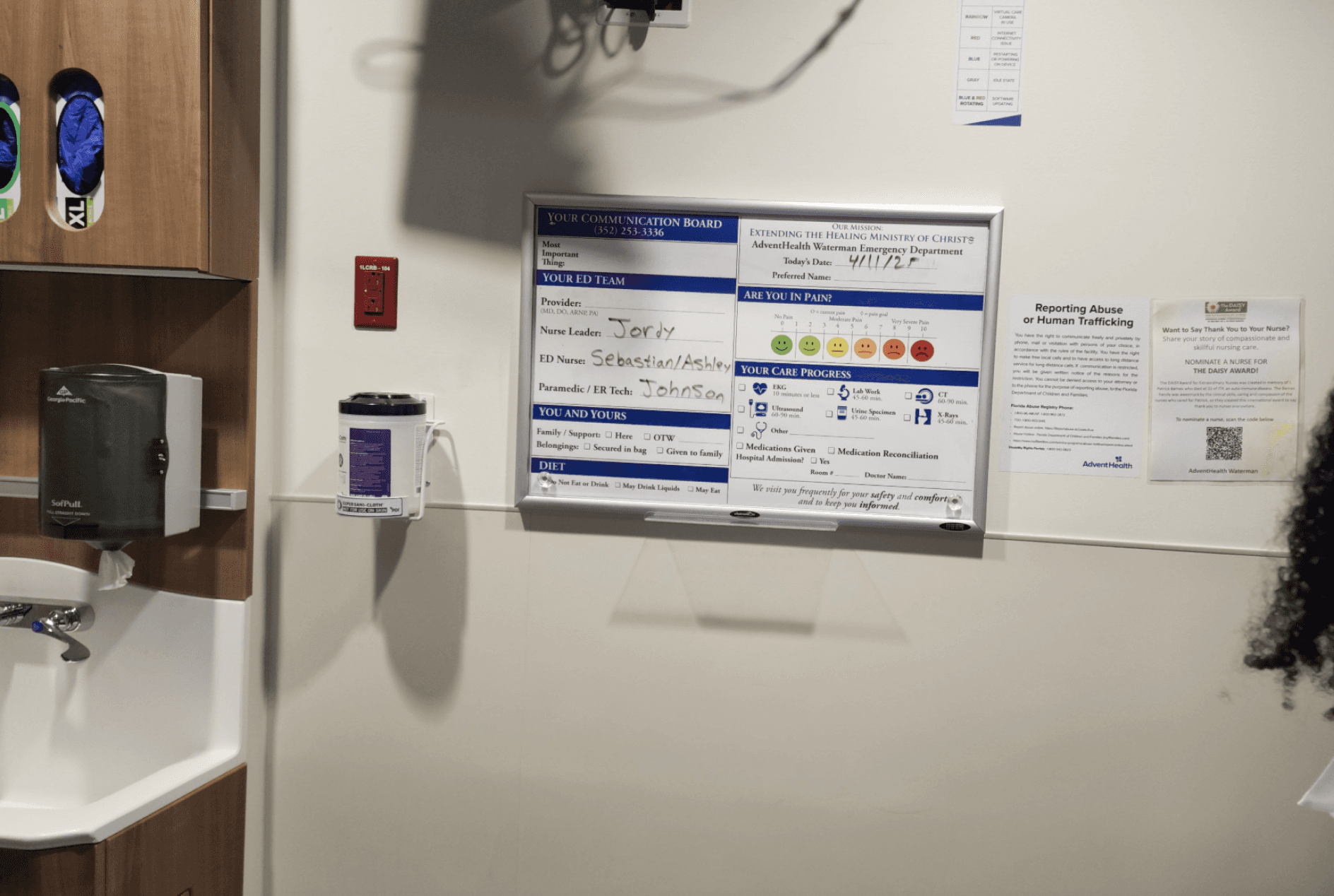
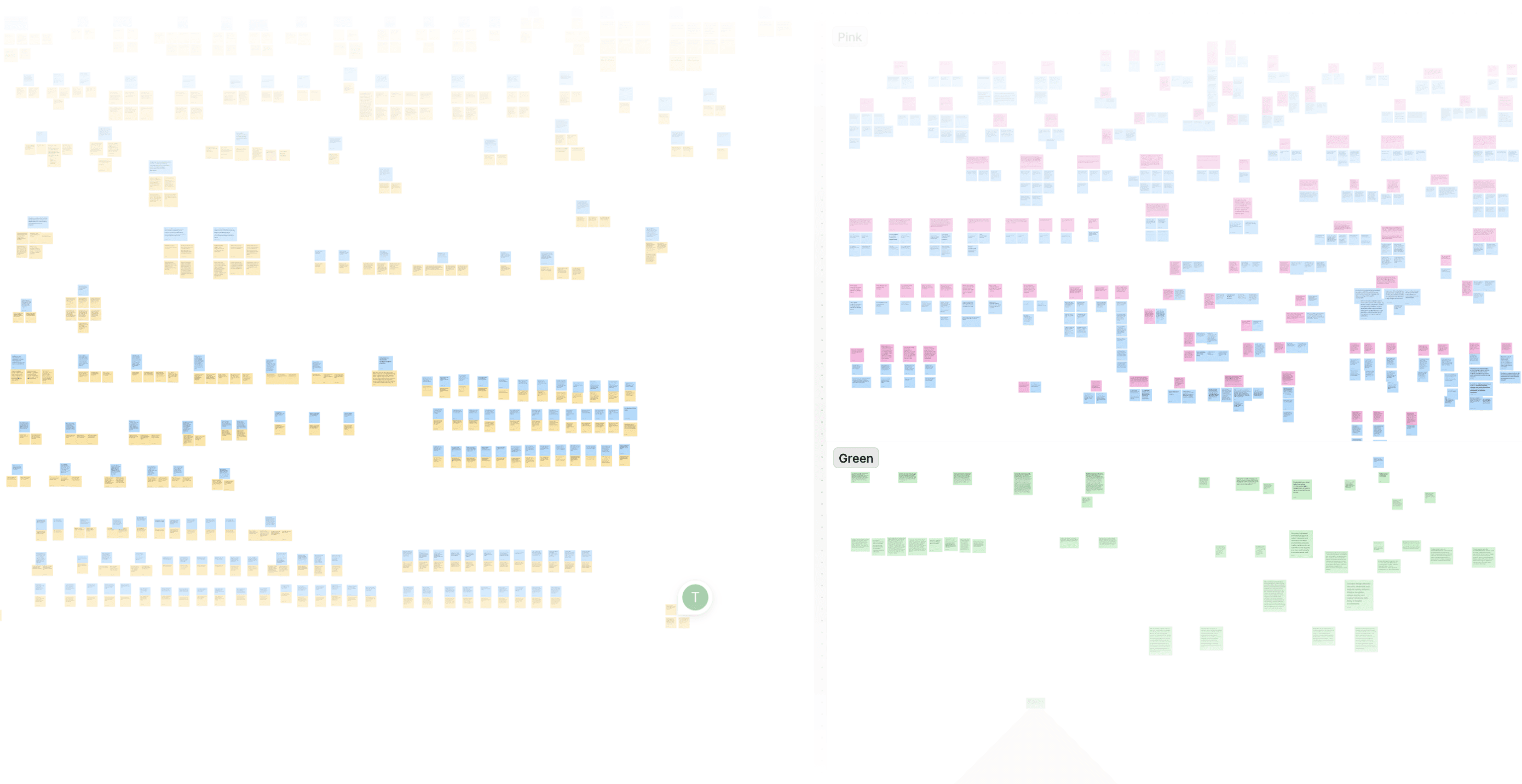
In total, we collected 800+ research data points. This work helped us identify shared goals and ultimately guided our design direction.
Analysis
User Insights
Patients want to feel seen, yet clinicians’ time is often consumed by searching for patients and equipment
By translated research insights into a comprehensive Customer Journey Map and Service Blueprint enabled us to identify breakdowns in communication, misaligned touchpoints, and gaps between frontstage and backstage operations.
Research findings showed that patients wanted to feel truly seen and cared for, while medical staff spent significant time and effort locating patients and essential equipment—leaving less capacity for direct patient care.
Based on this insight, the following HMW question was defined.

Ideation
Diverged ideas, mapped solutions, and validated user needs through rapid prototyping
During the ideation phase, the team was divided into five groups. Each group worked from the same shared research and requirements, independently generating solution concepts and early sketches. This structure enabled rapid delivery of five distinct solution directions for client review and validation within a tight timeline and limited resources.
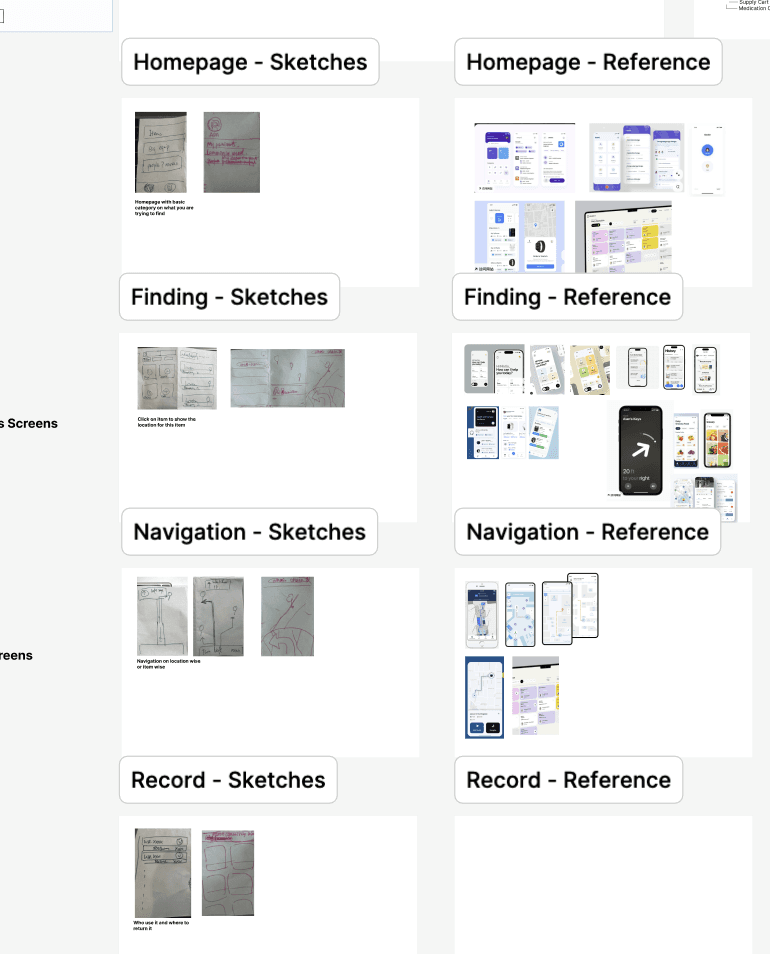

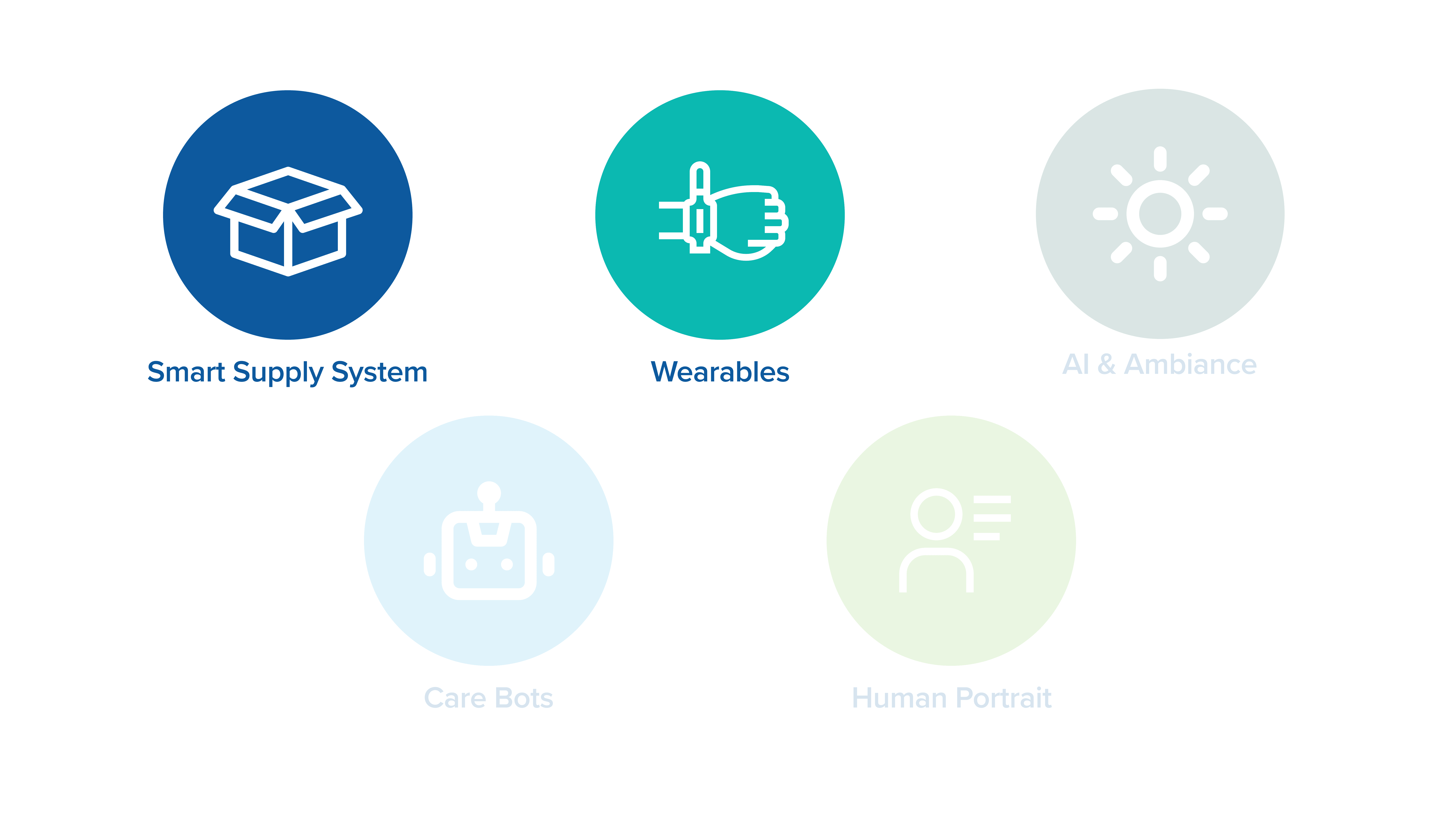
After client review, two concepts were selected as the primary direction. The team refined both concepts and divided ownership by product modules, guided by a shared information architecture and early sketches. This approach enabled rapid MVP delivery for client validation within tight time and resource constraints, while keeping the system experience aligned.
Iteration
Converging the Idea through Iteration & Testing
Each design team ran small-scale tests with clients, while we also conducted user testing on the patient interface within the campus.In addition to UX problems, we found some issues related to balancing results and ethical concerns .
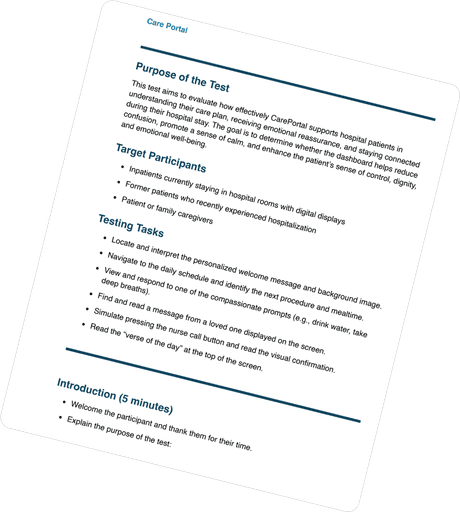
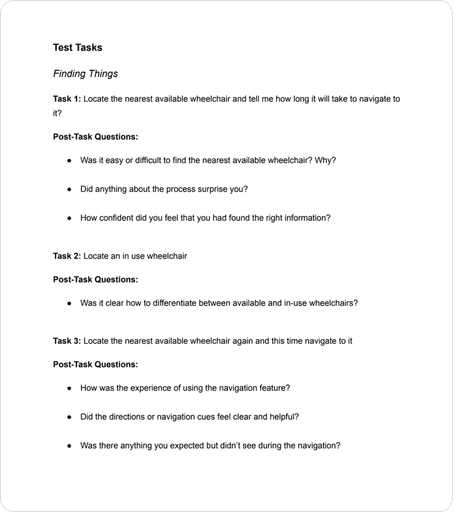
User test
We conducted 2 rounds of user testing over 3 iterations, including 80+ mid-fi frames.
Final Solution
An RFID-powered system that enables real-time tracking of staff and essential equipment for faster care team coordination
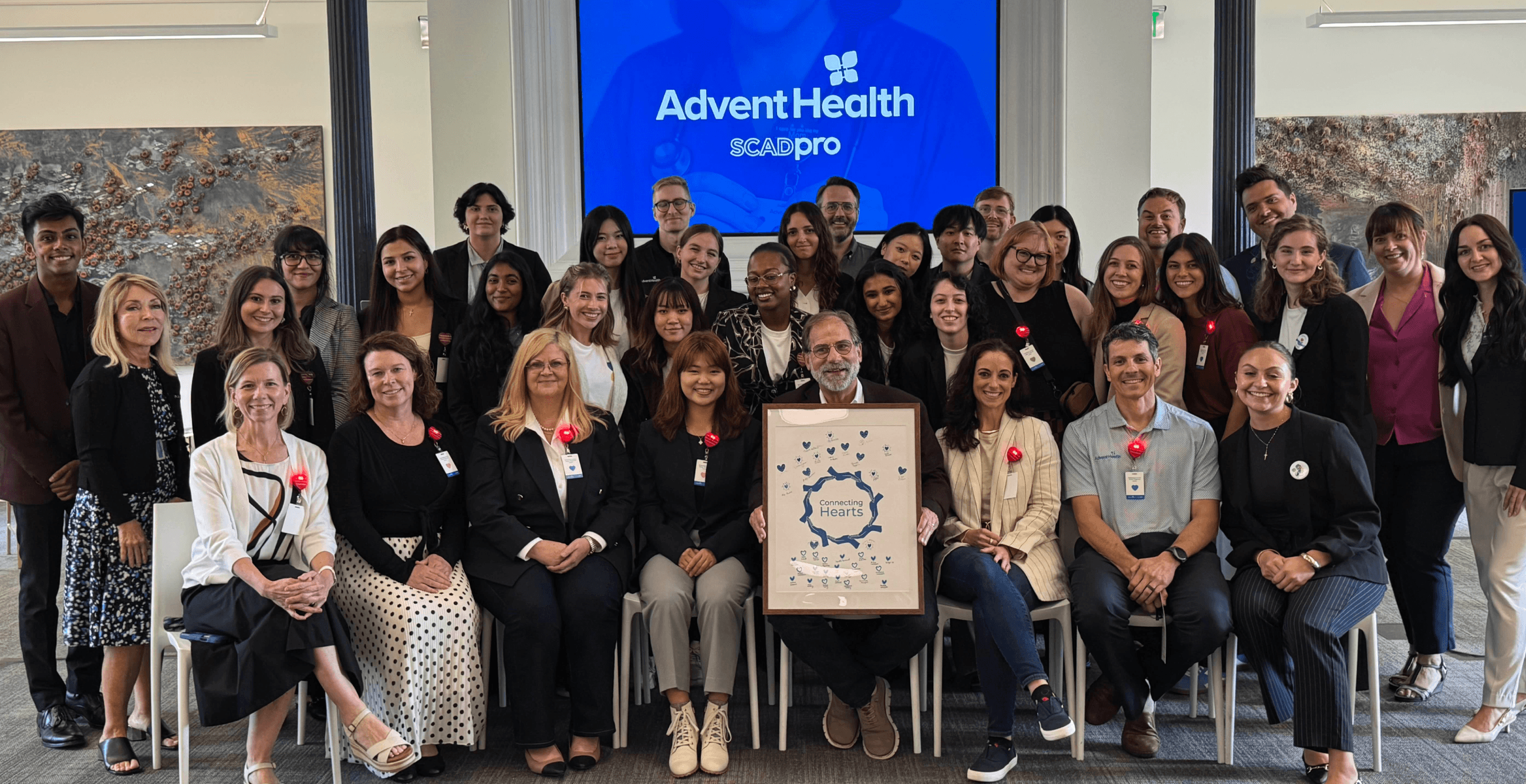
Delivering our final presentation to Advent health team was a nerve-wracking yet rewarding experience. Our design receive very positive feedback from our target users, our client, as well as subject experts and stakeholders.